Why Pretend Play Matters: How Imaginative Play Supports Child Development
Last updated: 3 Jul 2026
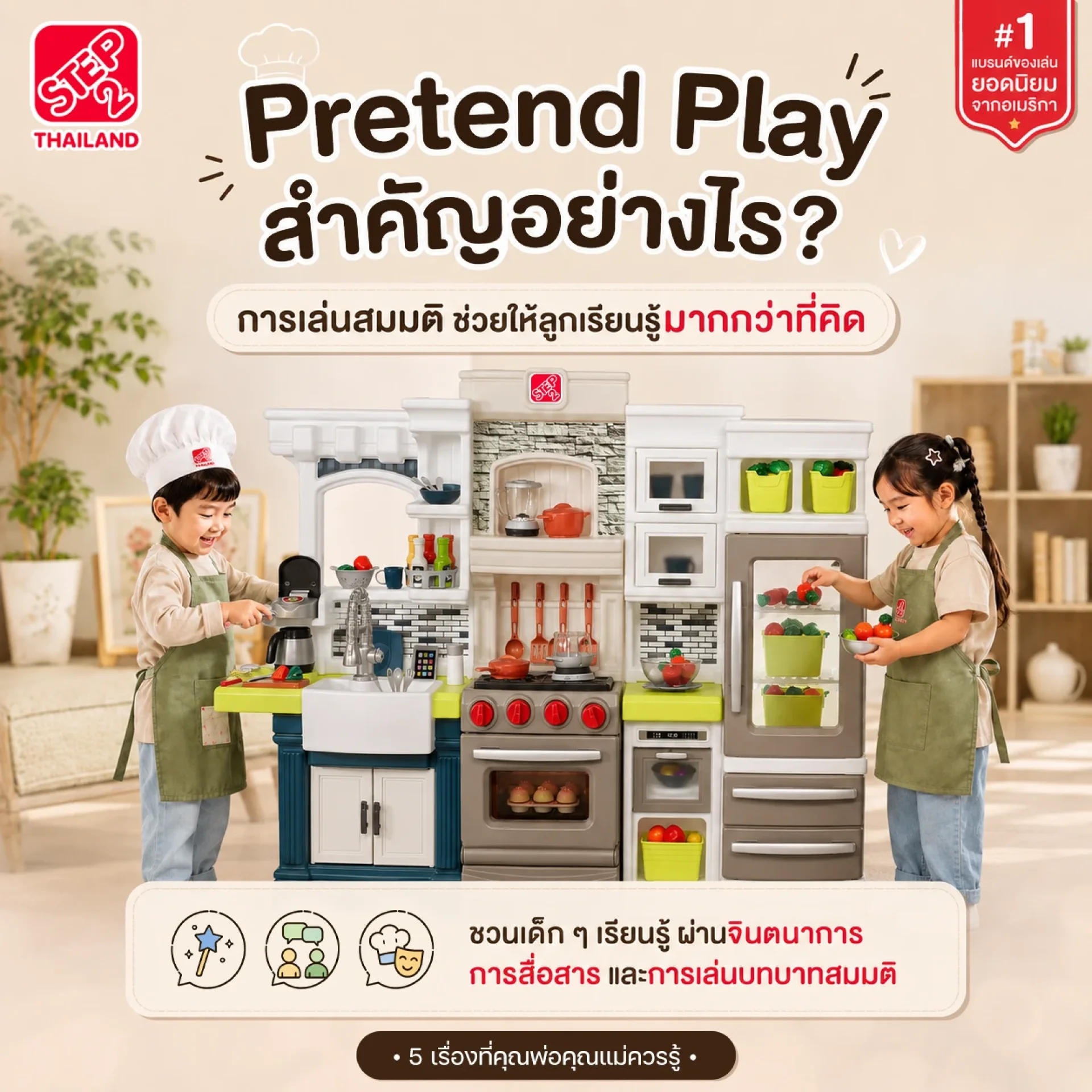
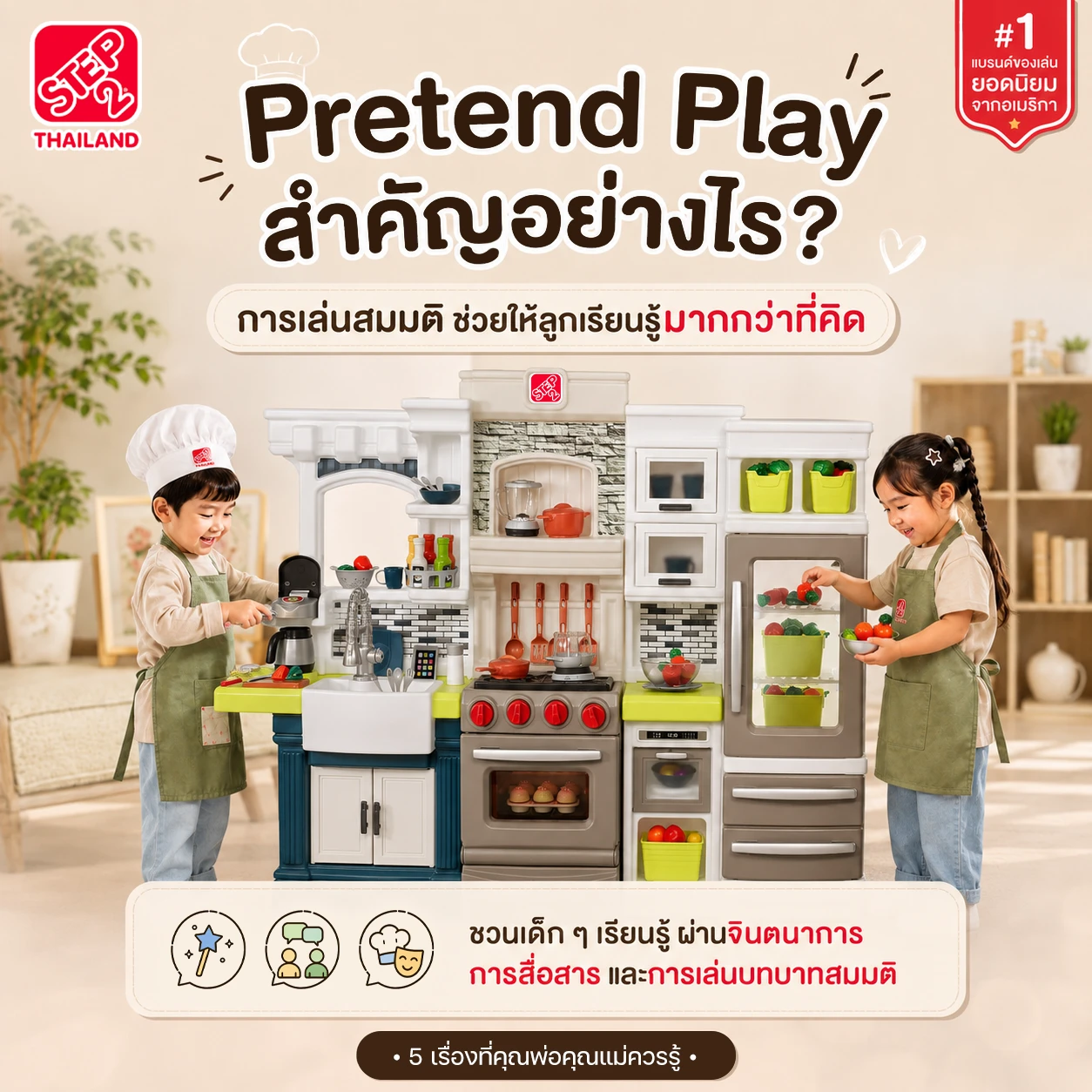
Why Pretend Play Matters More Than Just Fun
Pretend Play is one of the most meaningful ways children learn during early childhood. While it may look like simple play, children are actually developing important skills through imagination, communication, and role play.
When children pretend to be chefs, doctors, shop owners, parents, or teachers, they are not only having fun. They are learning how the world works, practicing decision-making, understanding emotions, and exploring social roles in a safe and natural way.
Parents do not need to prepare complicated activities. A safe play space, the right toys, and a few simple prompts can help open a world of learning for children every day.
"Pretend Play toys, role play toys for kids, developmental toys, imaginative play toys"
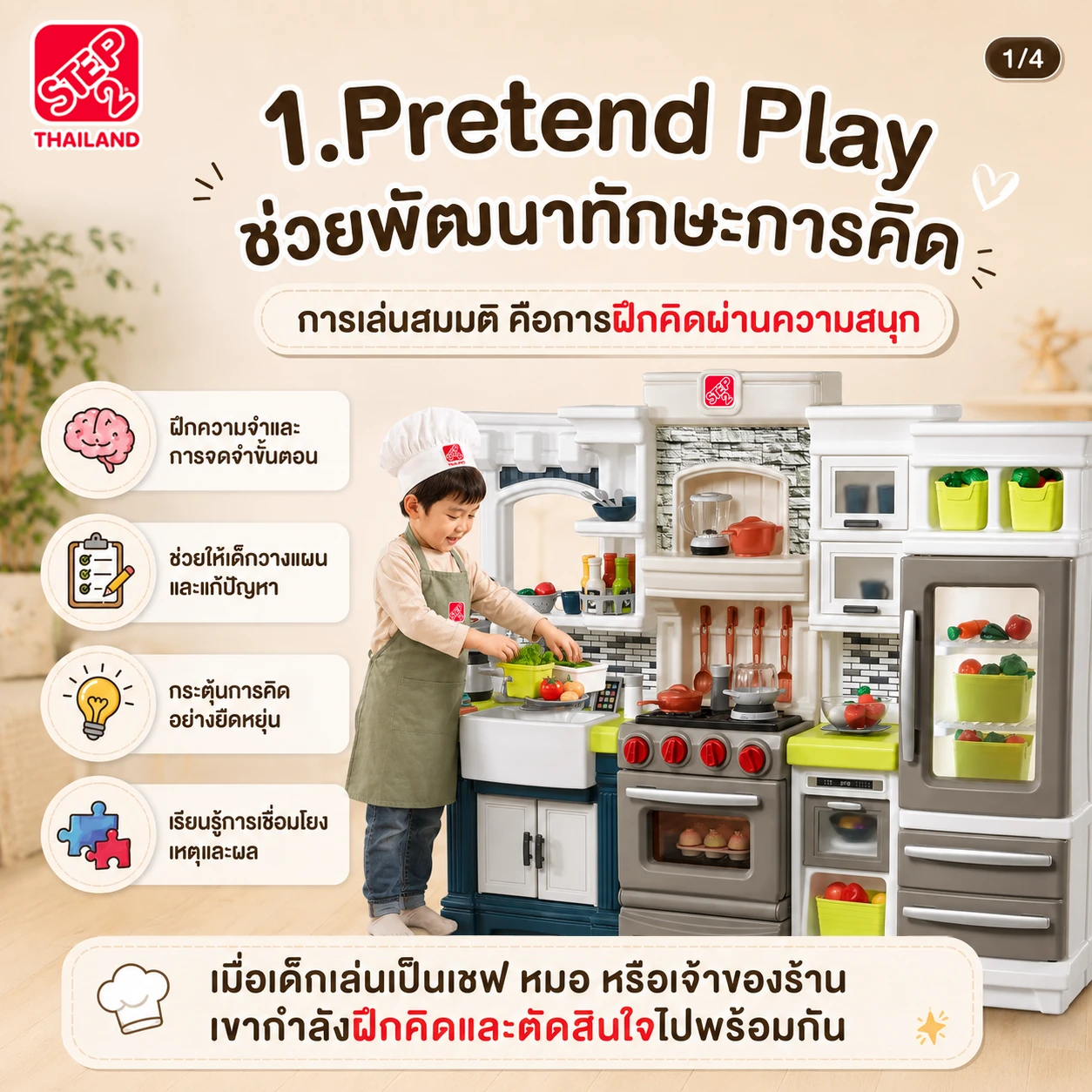
Pretend Play is one of the most meaningful ways children learn during early childhood. While it may look like simple play, children are actually developing important skills through imagination, communication, and role play.
When children pretend to be chefs, doctors, shop owners, parents, or teachers, they are not only having fun. They are learning how the world works, practicing decision-making, understanding emotions, and exploring social roles in a safe and natural way.
Parents do not need to prepare complicated activities. A safe play space, the right toys, and a few simple prompts can help open a world of learning for children every day.
"Pretend Play toys, role play toys for kids, developmental toys, imaginative play toys"
1. Pretend Play Supports Thinking and Problem-Solving Skills
Pretend Play encourages children to think naturally through situations they create with their imagination. For example, when a child pretends to be a chef, they may think about what menu to prepare, which ingredients to use, who the customer is, and how to serve the food.
These simple play moments help children practice memory, planning, sequencing, decision-making, and cause-and-effect thinking.
Pretend Play can also help children solve small problems during play, such as what to do when the food runs out, how to respond to a new customer request, or how to continue the story when the play situation changes.
Recommended product: Step2 play kitchen, kids kitchen set, pretend cooking toys, problem-solving toys for kids
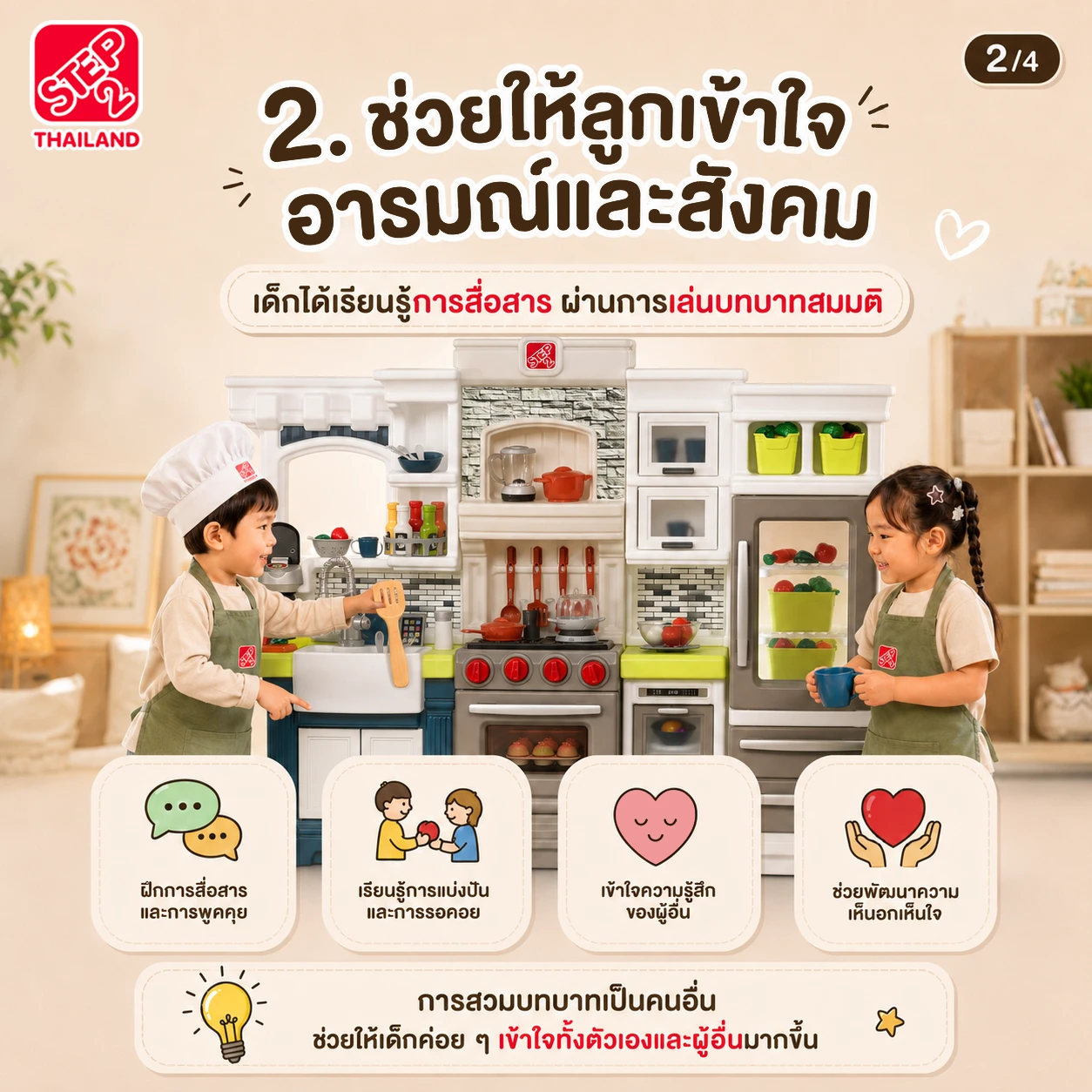
Pretend Play encourages children to think naturally through situations they create with their imagination. For example, when a child pretends to be a chef, they may think about what menu to prepare, which ingredients to use, who the customer is, and how to serve the food.
These simple play moments help children practice memory, planning, sequencing, decision-making, and cause-and-effect thinking.
Pretend Play can also help children solve small problems during play, such as what to do when the food runs out, how to respond to a new customer request, or how to continue the story when the play situation changes.
Recommended product: Step2 play kitchen, kids kitchen set, pretend cooking toys, problem-solving toys for kids
2. Pretend Play Helps Children Understand Emotions and Social Skills
When children take on different roles, they begin to see the world from different perspectives. Whether they are pretending to be a doctor, teacher, chef, or parent, they are learning how others may feel, think, and respond.
Playing with parents, siblings, or friends also helps children practice communication, sharing, turn-taking, waiting, and working together.
These small play experiences build the foundation for emotional development, empathy, and positive social relationships.
Recommended product: Step2 playhouse, role play toys for toddlers, social skills toys for kids, pretend play sets
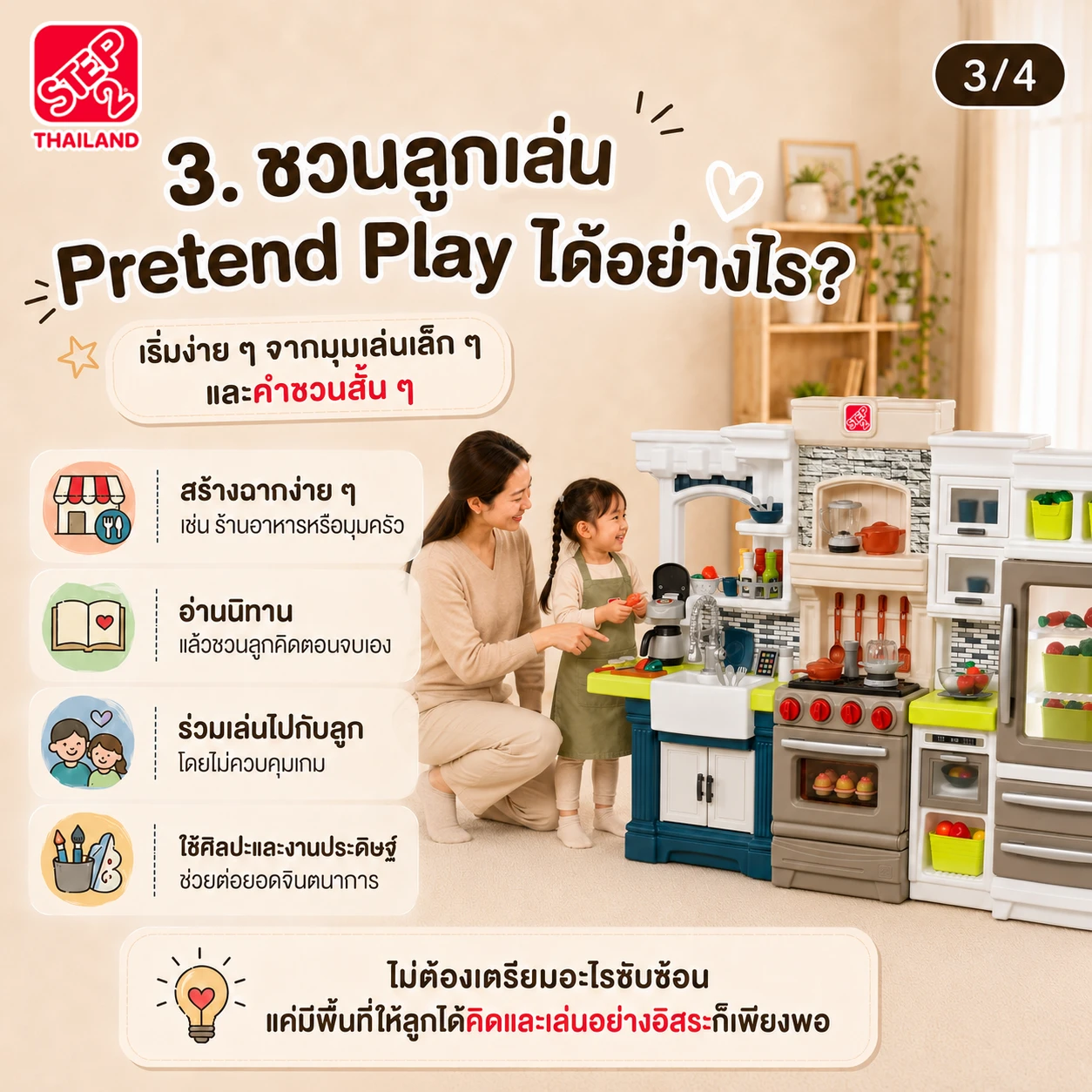
When children take on different roles, they begin to see the world from different perspectives. Whether they are pretending to be a doctor, teacher, chef, or parent, they are learning how others may feel, think, and respond.
Playing with parents, siblings, or friends also helps children practice communication, sharing, turn-taking, waiting, and working together.
These small play experiences build the foundation for emotional development, empathy, and positive social relationships.
Recommended product: Step2 playhouse, role play toys for toddlers, social skills toys for kids, pretend play sets
3. How to Encourage Pretend Play at Home
Encouraging Pretend Play does not have to be complicated. Parents can start with a small play corner at home, such as a toy kitchen area, a pretend restaurant, a doctor corner, or a doll care space.
Simple questions can help children continue their own stories, such as:
“What would you like to cook today?”
“What happens next?”
“If you were the chef, what would you do?”
The key is to join the play without taking control. Let children lead the story while parents gently support their imagination with short prompts.
Recommended product: kids play kitchen, pretend restaurant toys, kids activity table, imaginative play toys
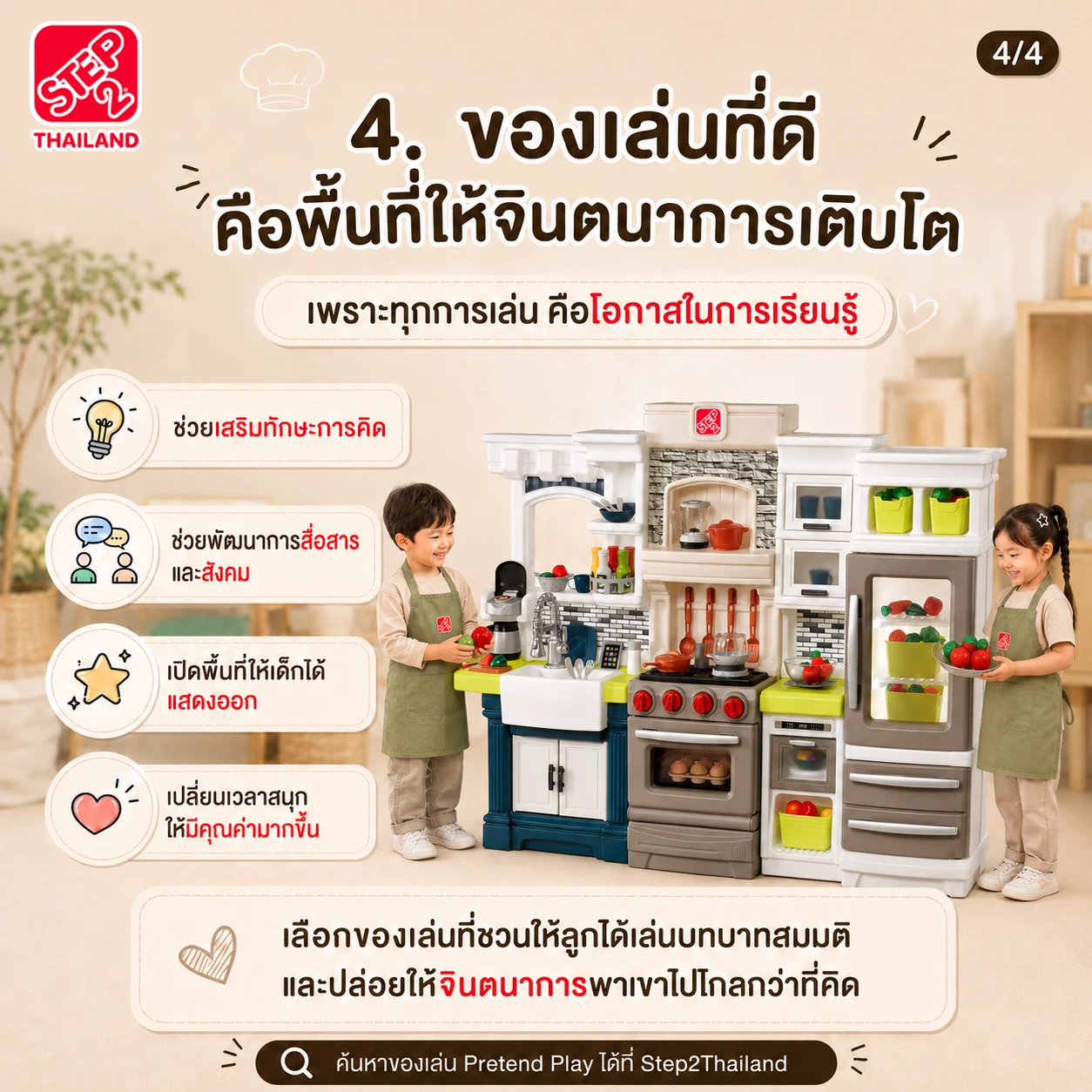
Encouraging Pretend Play does not have to be complicated. Parents can start with a small play corner at home, such as a toy kitchen area, a pretend restaurant, a doctor corner, or a doll care space.
Simple questions can help children continue their own stories, such as:
“What would you like to cook today?”
“What happens next?”
“If you were the chef, what would you do?”
The key is to join the play without taking control. Let children lead the story while parents gently support their imagination with short prompts.
Recommended product: kids play kitchen, pretend restaurant toys, kids activity table, imaginative play toys
4. Good Toys Give Imagination Room to Grow
A good toy is not only something that keeps children entertained. It should also give children space to think, explore, communicate, and create their own stories.
Toys that encourage role play, such as play kitchens, playhouses, activity tables, and pretend play sets, allow children to build their own little worlds.
Today, a child may be a chef. Tomorrow, they may be a shop owner. The next day, they may be an adventurer. Every role they choose helps them learn and grow through meaningful play.
Recommended product: imaginative toys for kids, Step2 kids toys, Step2 play kitchen, developmental toys for toddlers, outdoor play toys for kids
Conclusion
Pretend Play is more than just fun. It helps children develop thinking skills, communication, emotional understanding, social skills, and imagination.
With a safe space, suitable toys, and simple prompts from parents, children can turn everyday play into meaningful learning experiences.
Choose toys that give imagination room to grow, and let your child’s stories begin every day.
A good toy is not only something that keeps children entertained. It should also give children space to think, explore, communicate, and create their own stories.
Toys that encourage role play, such as play kitchens, playhouses, activity tables, and pretend play sets, allow children to build their own little worlds.
Today, a child may be a chef. Tomorrow, they may be a shop owner. The next day, they may be an adventurer. Every role they choose helps them learn and grow through meaningful play.
Recommended product: imaginative toys for kids, Step2 kids toys, Step2 play kitchen, developmental toys for toddlers, outdoor play toys for kids
Conclusion
Pretend Play is more than just fun. It helps children develop thinking skills, communication, emotional understanding, social skills, and imagination.
With a safe space, suitable toys, and simple prompts from parents, children can turn everyday play into meaningful learning experiences.
Choose toys that give imagination room to grow, and let your child’s stories begin every day.


Related Content

Ever wonder why toddlers love to climb on everything? It’s because they are wired to explore! Climbing is a vital part of early childhood development. Step2 Climbing Toys are specifically designed to turn that natural energy into essential life skills.
9 May 2026

Screens are now woven into our daily lives, and managing screen time wisely has become essential for every family. Proper screen-time management supports a child’s brain development, emotional growth, language learning, social skills, and healthy sleep.
This guide summarizes pediatrician-recommended guidelines and practical tips that parents can apply easily in everyday life.
The goal is not to eliminate screens, but to make sure children use screens mindfully, in the right amount, and with high-quality content.
20 Nov 2025

The most precious moments are those spent together as a family Step2Thailand invites parents to enjoy 5 easy and fun home activities that help strengthen bonds while supporting your child’s all-around development
4 Nov 2025

